

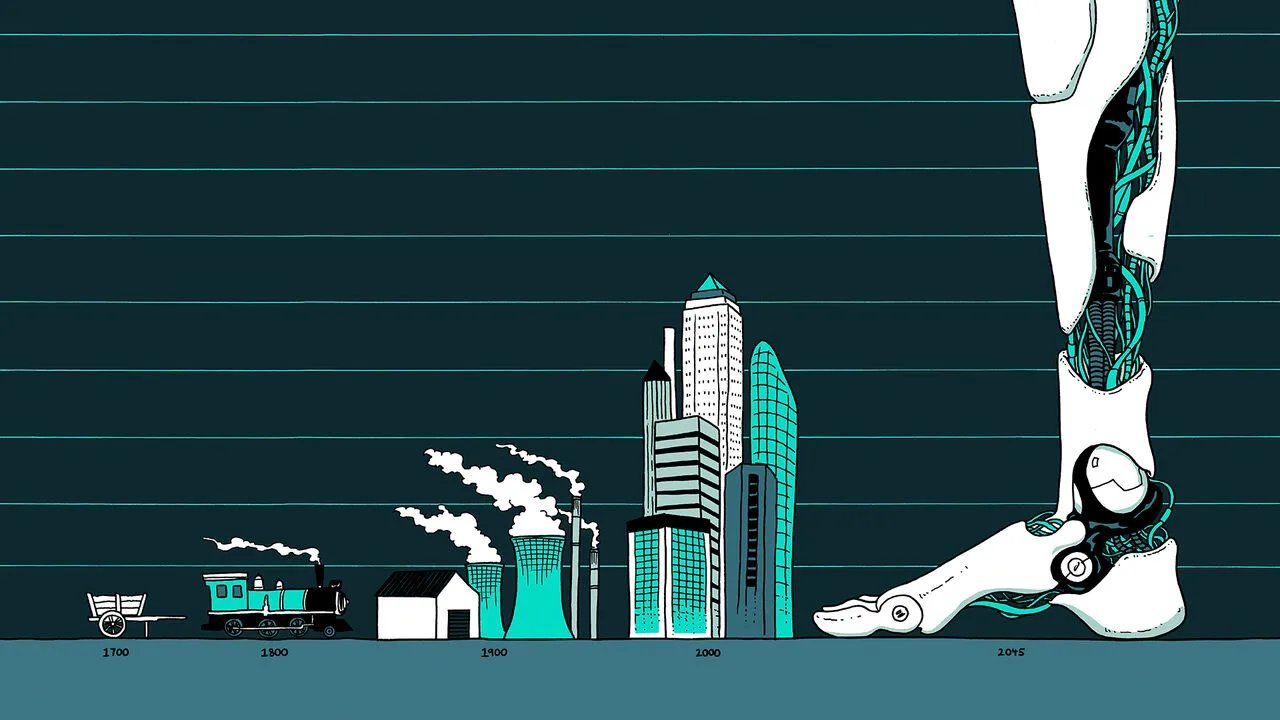
5 Big Myths About AI's Economic Impact
There is no shortage of confident claims about AI and the economy. Some predict a growth explosion, others warn of mass unemployment, and a third camp insists the whole thing is a bubble waiting to burst. Morningstar's economics team took a hard look at the most common of these claims. Here are five big myths — and what the data actually shows.
Myth 1: "AI can never be a profitable business."
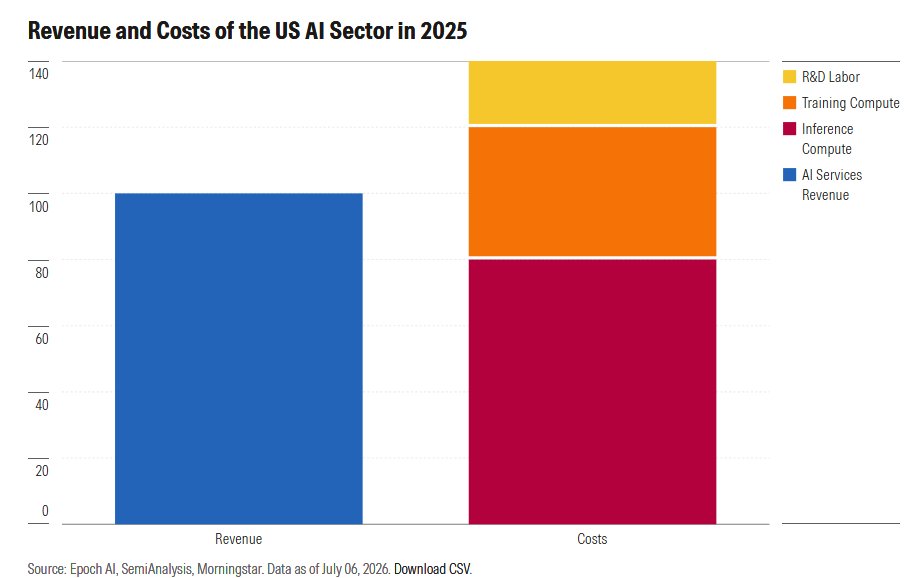
Reality: The US AI industry generated roughly $100 billion in revenue in 2025 — comfortably covering inference (serving) costs. Training costs are not yet fully covered, but with revenue growing at its current pace, profitability is a realistic path, not a fantasy.
Myth 2: "AI is behind the productivity boom."
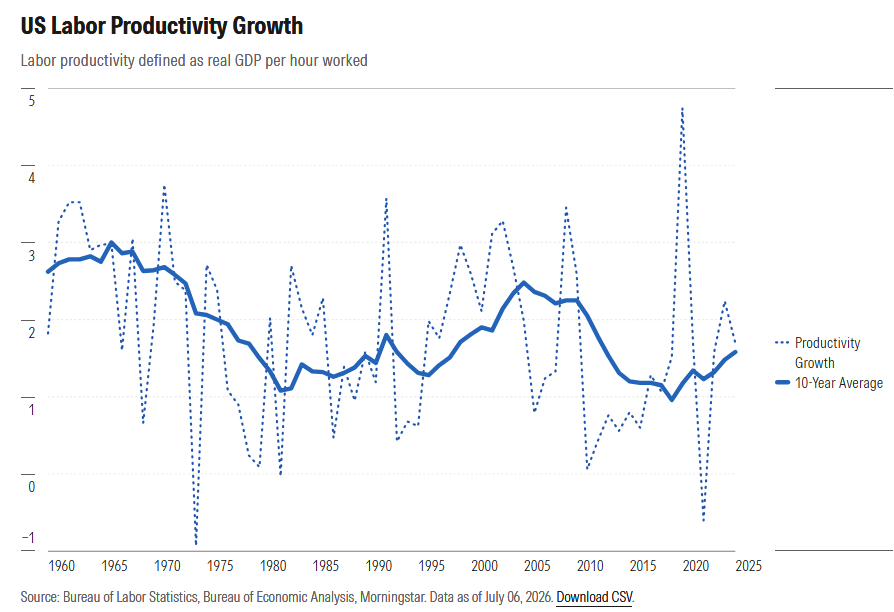
Reality: The overstatement cuts the other way too. The 1.9% productivity growth of 2020–2025 began before AI adoption became widespread, so other factors — such as a strong labor market — are the more likely drivers. AI's contribution to productivity should grow over time, but it does not explain the recent numbers.
Myth 3: "AI contributes nothing to GDP growth."
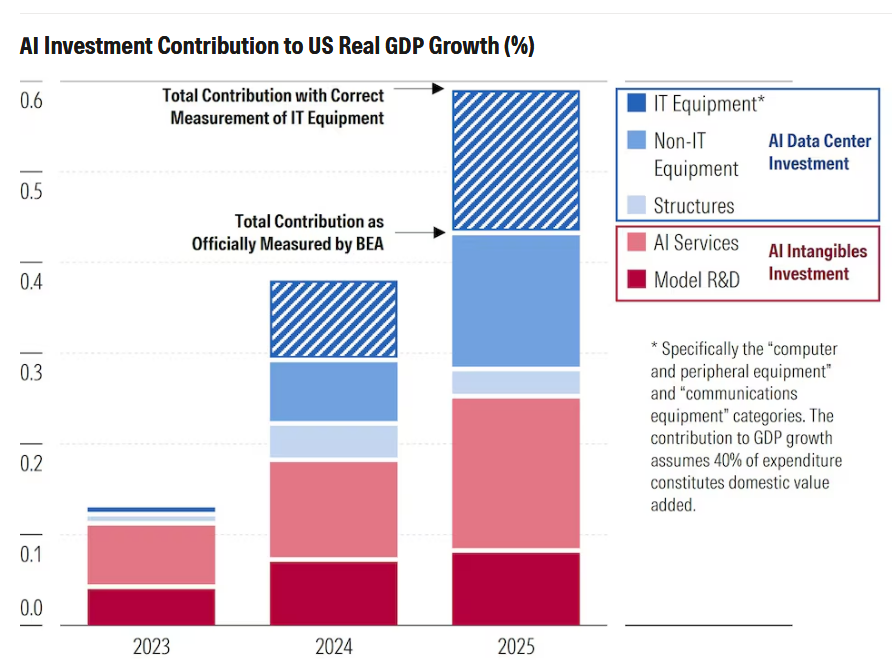
Reality: AI investment added about 0.4 percentage points to GDP growth in 2025 — and likely closer to 0.6 points if measurement issues were resolved. On top of the investment channel, the demand-side effects are substantial.
Myth 4: "If AI is a bubble, it will leave nothing behind."
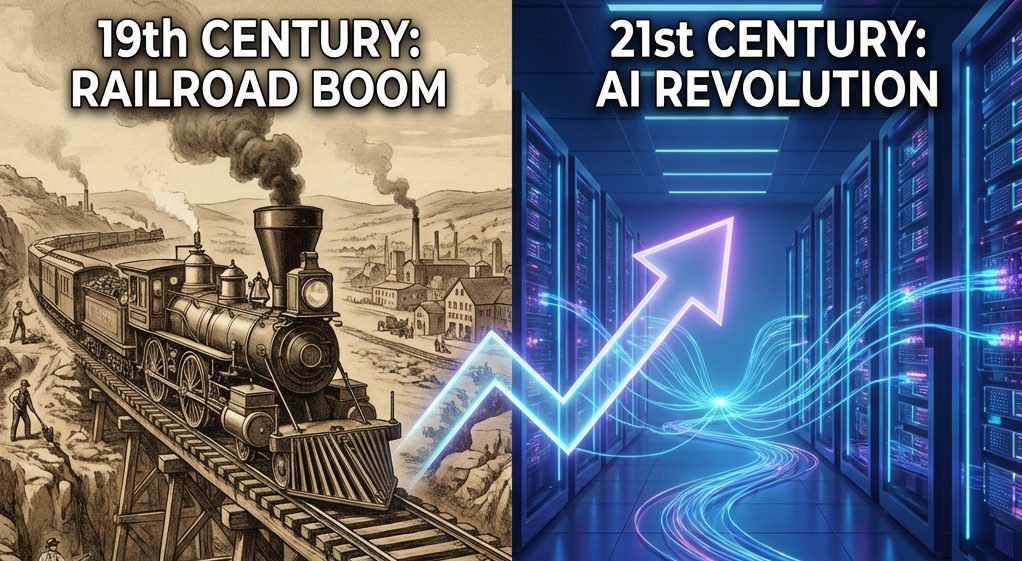
Reality: History says otherwise. The dot-com crash and the 19th-century railroad manias burned plenty of investors, yet the underlying technologies — the fiber, the rails — kept delivering lasting productivity gains long after the share prices collapsed. Even if AI valuations correct, the infrastructure and capabilities remain.
Myth 5: "If AI succeeds, workers are doomed."
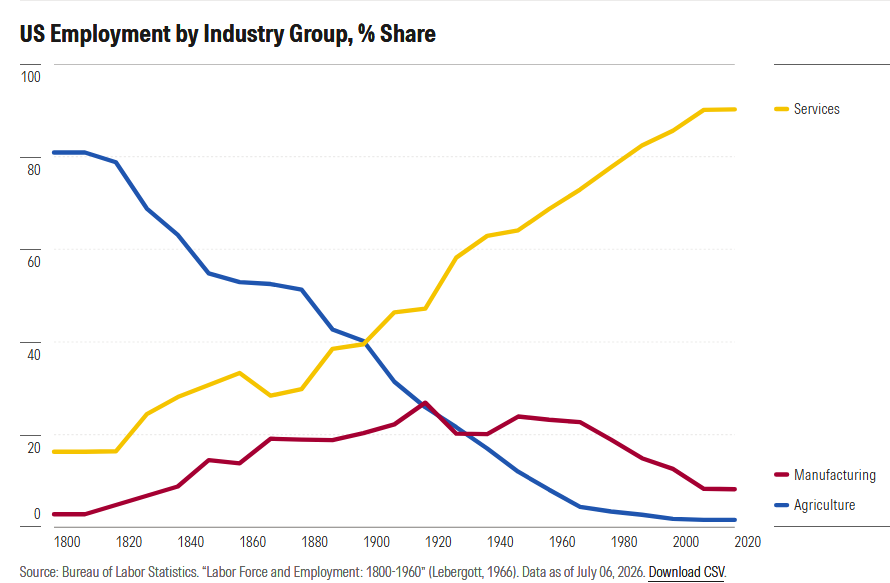
Reality: History does not support this either. The near-total automation of agriculture did not create permanent mass unemployment; as food prices fell, entirely new industries and jobs emerged. If AI makes its outputs cheap enough, workers can shift toward automation-resistant work and retain their share of the economy — just as they have through every previous wave of automation.
What this means for your organization
The practical takeaway: treat AI as durable infrastructure, not a fad or an apocalypse. The winners of previous technology booms were not the companies that timed the bubble, but the ones that adopted the technology deliberately while managing cost and risk. At Graf Clouds, our AIOps practice helps organizations adopt AI where it actually pays off — with the cost visibility and security controls to match.
Source: Morningstar, Preston Caldwell — 5 Myths About AI's Economic Impact: What the Data Actually Shows